
Intersectionality in LGBTQ+ Mental Health
Intersectionality helps explain how overlapping identities - like race, gender, socioeconomic status, and disability - impact LGBTQ+ mental health. These intersecting factors create unique challenges, including higher risks of depression, anxiety, and suicide. For example:
- LGBTQ+ people of color face racism in LGBTQ+ spaces and heterosexism in their own communities.
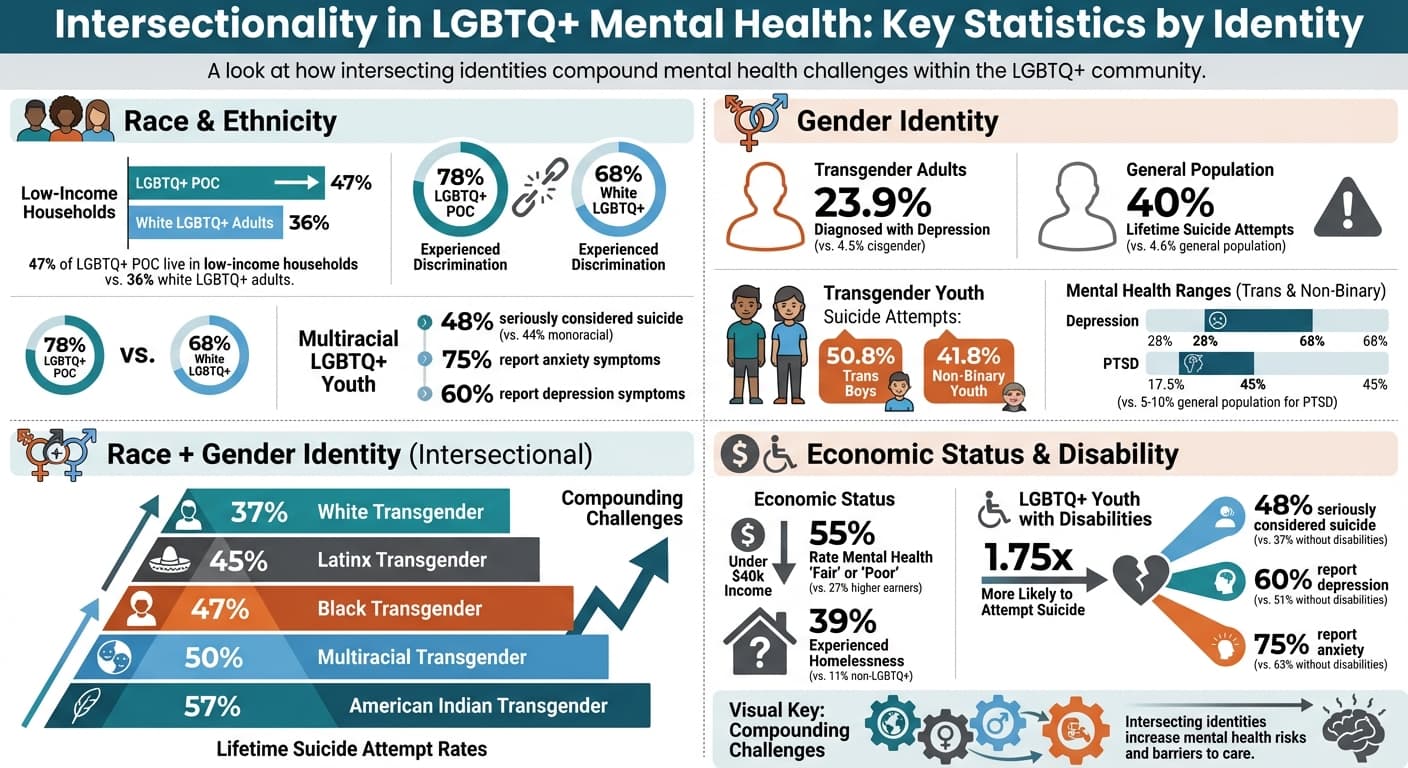
- Transgender and non-binary individuals report significantly higher rates of depression (up to 68%) and suicide attempts (40% or more).
- Economic disparities leave nearly 47% of LGBTQ+ people of color in low-income households, limiting access to mental health care.
- Disabled LGBTQ+ youth are 1.75x more likely to attempt suicide than their peers without disabilities.
Key strategies for addressing these disparities include therapy approaches that account for multiple identities, systemic policy changes, and tools like Gaslighting Check, which validates experiences of emotional manipulation. Effective mental health care must address these overlapping realities to reduce stress and improve outcomes.
::: @figure
Advancing LGBTQ+ Health Research by Centering Race, Gender, and Culture with Alison Cerezo, PhD
Detect Manipulation in Conversations
Use AI-powered tools to analyze text and audio for gaslighting and manipulation patterns. Gain clarity, actionable insights, and support to navigate challenging relationships.
Start Analyzing NowHow Race and Ethnicity Affect LGBTQ+ Mental Health
LGBTQ+ individuals of color navigate a unique and complex web of challenges. Not only do they face societal racism, but they also encounter heterosexism and transphobia, sometimes even within their own racial or cultural communities. This dual layer of stress creates mental health challenges that are deeply intertwined and cannot be fully understood by examining either identity separately [2][5].
In some LGBTQ+ spaces, racist microaggressions from white individuals can lead to significant feelings of isolation for LGBTQ+ people of color. These microaggressions, research shows, can have as much of an impact on mental health as other LGBTQ-related stressors [11].
"Racist microaggressions perpetrated by white SGM people, along with SGM-related family rejection and internalized LGBTQ-phobia, have significant detrimental effects on psychological distress rates among SGM SOC." – CDC [11]
Economic disparities add another layer of difficulty. Nearly half (47%) of LGBTQ+ people of color live in low-income households, compared to 36% of white LGBTQ+ adults. Additionally, 78% of LGBTQ+ people of color report experiencing discrimination within the past year, a higher rate than their white counterparts (68%) [13].
Mental Health Challenges for LGBTQ+ People of Color
The intersection of racial and LGBTQ+ identities is particularly evident in the mental health struggles of multiracial LGBTQ+ youth. Statistics paint a stark picture: 48% of multiracial LGBTQ+ youth have seriously considered suicide in the past year, compared to 44% of their monoracial peers. Similarly, 17% have attempted suicide, versus 14% of monoracial youth [10]. Anxiety and depression are also widespread, with 75% reporting anxiety symptoms and 60% experiencing depression. Among multiracial youth who are exclusively people of color, depression rates climb even higher to 66%, compared to 59% for those with one white parent [10].
These struggles are often exacerbated by identity invalidation. Many multiracial LGBTQ+ youth feel their racial identity is questioned or not fully accepted by any one group, adding to their stress [10]. Economic instability further compounds these challenges: 31% of multiracial LGBTQ+ youth have experienced food insecurity in the past month [10].
Specific Experiences: LGBTQ+ Asian and African American Communities
African American LGBTQ+ individuals face unique pressures stemming from cultural norms and expectations. Rigid gender roles and strong religious affiliations often force individuals to conceal their identities, leading to internalized homophobia and limited participation in LGBTQ+ communities. For example, Black LGBTQ+ youth are less likely than their white peers to feel comfortable with their sexual or gender identity or to engage in LGBTQ+ groups or activities [14].
"Black sexual minority women are triply marginalized due to their race, gender, and sexual orientation." – Sarah K Calabrese, Yale School of Public Health [9]
Asian American LGBTQ+ individuals encounter a different set of challenges. In some Asian American communities, LGBTQ+ identities are dismissed as "Western" concepts, which can result in denial and shame within families and communities [14]. Systemic barriers make matters worse. Black, Latinx, and Asian LGBTQ+ individuals often face lower odds of accessing mental health care, partly due to mistrust, historical discrimination, and a lack of mental health professionals equipped to address their specific needs [12].
For multiracial Asian American and Pacific Islander (AAPI) LGBTQ+ students, these difficulties are even more pronounced. They report higher levels of racist victimization, more discrimination based on sexual orientation or gender identity, and fewer supportive staff members at school [10].
| Mental Health Indicator | Multiracial | Monoracial |
|---|---|---|
| Seriously Considered Suicide (Past Year) | 48% | 44% |
| Attempted Suicide (Past Year) | 17% | 14% |
| Symptoms of Anxiety (Past 2 Weeks) | 75% | 72% |
| Symptoms of Depression (Past 2 Weeks) | 60% | 57% |
Gender Identity and Mental Health
Transgender and non-binary individuals face disproportionately high rates of mental health challenges compared to their cisgender peers. For example, 23.9% of transgender adults have been diagnosed with depression, compared to just 4.5% of cisgender adults. Similarly, they experience nearly three times the risk of anxiety and more than double the risk of suicide. These outcomes are often linked to minority stress factors like discrimination, violence, gender dysphoria, and the psychological toll of hiding their identity [15][18].
The statistics are even more alarming when it comes to suicide. Approximately 40% of transgender individuals report attempting suicide at some point in their lives, a stark contrast to 4.6% in the general population [15]. Among youth, the numbers are even higher - 50.8% of transgender boys and 41.8% of non-binary youth have reported suicide attempts, compared to 17.6% of cisgender girls and 9.8% of cisgender boys [15].
"Individuals who are transgender or nonbinary experience a higher prevalence of certain mental health concerns, including depression, anxiety and disordered eating behaviors." – Elliot A. Tebbe and Stephanie L. Budge [15]
In addition to interpersonal discrimination, transgender and non-binary individuals encounter structural obstacles, including healthcare gatekeeping, restrictive restroom policies, and legal challenges in updating identification documents. These barriers exacerbate the psychological distress caused by societal stigma and limit access to critical care [15].
Mental Health Issues for Transgender and Non-Binary People
Gender dysphoria, the distress caused by a mismatch between one's gender identity and sex assigned at birth, is a major concern for many transgender individuals. With growing recognition of gender as a spectrum, there is a push to address this distress more effectively [15]. However, violence and discrimination continue to inflict severe psychological harm. Rates of PTSD among transgender and non-binary individuals range from 17.5% to 45%, compared to 5% to 10% in the general population [15]. Similarly, clinical depression affects 28% to 68% of this group.
Non-binary individuals face distinct challenges that often lead to worse mental health outcomes compared to binary transgender people. A large community health study revealed that non-binary participants had a 29.2% to 47.1% likelihood of meeting clinical criteria for depression and anxiety [16]. This disparity is partly due to the erasure of non-binary identities in medical and social systems, which often recognize only male or female categories [15][16].
Access to gender-affirming healthcare is another critical issue. Many transgender individuals face insurance denials and a lack of knowledgeable providers, making it difficult to access hormone therapy, surgeries, and mental health support. These treatments have been shown to improve well-being and reduce depression, yet they remain out of reach for many due to systemic barriers [15]. These challenges are often compounded by racial and economic inequities.
How Race and Class Affect Transgender Mental Health
Race and class further complicate the mental health challenges faced by transgender individuals. For instance, transgender American Indian or Alaska Native adults face over eight times the odds of frequent mental distress compared to cisgender white adults [17]. This "double discrimination", where racism and transphobia intersect, creates unique psychological burdens that can't be fully understood when examining each identity in isolation [17][18].
Suicide attempt rates also vary significantly across racial groups within the transgender community. While 37% of white transgender respondents report lifetime suicide attempts, the rates are even higher for other groups: 47% for Black respondents, 45% for Latinx respondents, 50% for multiracial respondents, and 57% for American Indian respondents [15].
| Identity Group | Lifetime Suicide Attempt Rate |
|---|---|
| White Transgender | 37% |
| Black Transgender | 47% |
| Latinx Transgender | 45% |
| Multiracial Transgender | 50% |
| American Indian Transgender | 57% |
These statistics highlight how overlapping identity challenges increase suicide risk among transgender individuals.
Economic inequality also plays a significant role. Transgender and non-binary adults are more likely to live in poverty than their cisgender peers, which limits access to gender-affirming care, safe housing, and mental health treatment. This cycle of disadvantage is particularly severe for Black non-binary individuals assigned female at birth, 44.4% of whom meet clinical thresholds for both depression and anxiety [16].
"Black trans women... are most directly affected by the intersections of transphobia and racism in the US." – Stephanie Anne Shelton, Educational Studies Researcher, University of Alabama [19]
Mental health professionals often use a "single-axis" framework that focuses solely on gender identity, ignoring the combined effects of poverty, racism, and geographic context. For example, a transgender person of color in a rural area of the Bible Belt may face vastly different challenges than a white transgender individual in an urban, progressive city. Effective mental health care must address these intersecting realities rather than treating all transgender individuals as a single, uniform group [16][19].
Economic Status and Disability in LGBTQ+ Mental Health
How Poverty Affects LGBTQ+ Mental Health
Economic struggles add another layer of difficulty to the mental health challenges faced by LGBTQ+ individuals. Financial hardship is far more common in LGBTQ+ communities compared to their heterosexual and cisgender counterparts. For example, 55% of LGBTQ+ adults with household incomes below $40,000 rate their mental health as "fair" or "poor", compared to only 27% among those earning more [21]. This disparity isn’t just about income - it’s about access to essential resources like healthcare, stable housing, and relief from the constant stress of financial insecurity.
Homelessness is another glaring issue tied to poverty. Nearly 39% of lower-income LGBTQ+ adults have experienced homelessness, a staggering figure compared to 11% of non-LGBTQ+ adults [21]. Without stable housing, maintaining consistent mental health treatment becomes nearly impossible. On top of that, 46% of LGBTQ+ adults reported needing mental health services in the past three years but didn’t receive them [21]. The reasons are often tied to financial and systemic barriers.
Even when seeking care, lower-income LGBTQ+ individuals face discrimination. 41% of LGBTQ+ adults earning less than $40,000 reported unfair or disrespectful treatment by healthcare providers, compared to 22% of those with higher incomes [21]. These interactions often include being blamed for their health issues or having providers make assumptions without asking the right questions. Such discrimination discourages people from seeking care in the first place.
"Six in ten LGBTQ+ adults say they prepare for possible insults or feel they need to be careful about their appearance to be treated fairly at least some of the time during health care visits." – KFF Survey of Racism, Discrimination, and Health [21]
Employment challenges only add to the problem. 59% of LGBTQ+ individuals feel they have fewer job opportunities, while 50% believe they are paid less than their non-LGBTQ+ peers [22]. This wage gap forces many to choose between paying for necessities like rent or accessing mental health support. These financial pressures amplify the mental health disparities already shaped by other marginalized identities.
LGBTQ+ People with Disabilities Face Multiple Barriers
When disability intersects with LGBTQ+ identity, the challenges to mental health care become even more severe. The statistics paint a troubling picture: LGBTQ+ youth with disabilities are 1.75 times more likely to report a suicide attempt in the past year compared to their peers without disabilities [20]. This stems from the dual weight of discrimination based on both sexual or gender identity and disability, often involving manipulative patterns, commonly referred to as compounding minority stress [20].
The numbers highlight the impact of this stress. Among LGBTQ+ youth with disabilities, 48% seriously considered suicide, compared to 37% of those without disabilities. Similarly, rates of depression and anxiety are higher - 60% versus 51% for depression, and 75% versus 63% for anxiety [20].
Discrimination further complicates matters. 65% of LGBTQ+ youth with disabilities reported experiencing discrimination based on their actual or perceived disability in the past year [20]. This happens in schools, healthcare settings, and even within LGBTQ+ spaces, which are not always accessible or welcoming to disabled individuals.
Finding mental health care that addresses both LGBTQ+ identity and disability is another hurdle. The right therapist can make a significant difference - LGBTQ+ youth with disabilities who felt their therapist understood their disability had 30% lower odds of attempting suicide in the past year [20]. But such therapists are rare, as many mental health professionals lack training in disability-informed care, leaving patients feeling misunderstood and unsupported.
"These heightened rates [of mental health concerns] are likely related to compounding experiences of minority stress due to their LGBTQ+ identity and disability." – The Trevor Project [20]
Advocacy Strategies for Intersectional Mental Health
Therapy Approaches That Recognize Multiple Identities
Addressing mental health disparities within the LGBTQ+ community requires therapy approaches that consider the full spectrum of a person’s identity. The ADDRESSING Framework offers a way to evaluate and incorporate multiple identity dimensions into treatment plans [24].
Shared Decision Making (SDM) is another key strategy, encouraging collaboration between patients and therapists to create treatment plans that resonate with the patient’s values and lived experiences [23]. Experts emphasize that understanding intersectionality is crucial for meeting the diverse needs of LGBTQ+ individuals [23].
Certain therapeutic methods have proven particularly effective in addressing these complexities:
- LGB-Affirmative Cognitive-Behavioral Therapy (CBT): Focuses on managing minority stress in young gay and bisexual men.
- Attachment-Based Family Therapy (ABFT): Aims to rebuild family connections for suicidal lesbian, gay, and bisexual adolescents [26].
- Radical Healing Framework: Tackles the trauma of racism for LGBTQ+ people of color through an intersectional approach [26][27].
- Acceptance and Commitment Therapy (ACT): Helps reduce self-stigma related to sexual orientation [26].
A cornerstone of effective therapy is cultural humility - an ongoing process of self-reflection that acknowledges the complexity of cultural identities rather than assuming complete understanding.
"An intersectional approach to psychotherapy offers opportunities for strengthening the therapeutic alliance and improving professional practice via attention to cultural complexities affecting clients, therapists, and the mental health system" – Pamela A. Hays, PhD [24]
Therapists can strengthen their practice by conducting holistic assessments that address systemic barriers, particularly for BIPOC LGBTQ+ clients. Integrating culturally relevant techniques or traditional healing practices can also enhance care [25]. These therapy approaches lay the groundwork for broader policy reforms aimed at reducing minority stress.
Policy Changes to Reduce Minority Stress
While therapy addresses individual needs, structural changes are necessary to eliminate systemic barriers impacting LGBTQ+ mental health. Policymakers must adopt strategies that address overlapping inequalities, such as poverty, racial discrimination, and unsafe living conditions, which exacerbate minority stress for marginalized LGBTQ+ individuals [28].
Protective policies at the state level have shown measurable benefits. For instance, they can act as a safeguard against depression and bullying, particularly for Black and Latinx LGBTQ+ youth [28]. A significant step forward occurred in 2011 when the Joint Commission mandated that hospitals prohibit discrimination based on sexual orientation and gender identity as part of their accreditation requirements [22].
To further these efforts, policies should:
- Fund services that are culturally responsive.
- Require ongoing cultural humility training for healthcare providers [28].
Since oppression operates across multiple dimensions, addressing it requires policies that are intersectional in their design. Governments should move away from siloed approaches and instead develop integrated policies that consider the full spectrum of marginalization [29].
Clinicians can also enhance care by incorporating intersectionality into SDM, ensuring they meet the needs of LGBTQ+ patients who are also racial or ethnic minorities [23]. Advocates play a critical role in fostering partnerships that include racial and ethnic minority LGBTQ+ patients in decision-making processes. Increasing workforce diversity - such as hiring more transgender individuals and people of color - helps build trust and ensures care reflects the communities served [30].
Gaslighting and Intersectional LGBTQ+ Mental Health
How Gaslighting Affects LGBTQ+ Individuals
Gaslighting - an emotional manipulation tactic that causes someone to doubt their own reality - can have a particularly damaging impact on LGBTQ+ individuals, especially those navigating intersecting identities. This harm isn't limited to personal relationships; it often extends to broader social settings and even institutions that are supposed to offer support.
For LGBTQ+ people of color, the challenges are compounded. They may face heterosexism within their racial or ethnic communities while simultaneously encountering racism in predominantly white LGBTQ+ spaces [4]. This creates a painful dynamic where no space feels entirely safe or validating.
"Heterosexism from other POC may put SGM POC at higher exposure for negative mental health outcomes and reduce the mental health benefits of a stronger connection to the SGM community." – Gregory Swann, Department of Medical Social Sciences, Northwestern University [3]
Racist microaggressions within LGBTQ+ spaces, often perpetuated by white individuals, can act as a form of social gaslighting. These actions invalidate the lived experiences of people of color and contribute to increased psychological distress [11]. Research shows that Black sexual minorities experience negative intersectional events on roughly 11.4% of days, which leads to heightened identity conflict and negative thought patterns [31]. These stressors don’t just add up - they multiply, intensifying their impact on mental health [7][1].
The statistics paint a grim picture: 79% of anti-LGBTQ hate-related homicides in the U.S. involved LGBTQ+ individuals of color [4]. LGBTQ+ Latinx individuals report higher rates of online harassment, threats, robbery, and workplace violence compared to their non-Latinx peers [4]. Meanwhile, those assigned female at birth who reject traditional gender roles face a unique form of manipulation known as "gendered heterosexism", targeting both their sexual orientation and gender nonconformity [3].
Financial challenges further exacerbate these issues, making it harder for marginalized LGBTQ+ individuals to leave harmful environments or access mental health resources [32].
Amid these compounded stressors, tools that validate and empower individuals are essential. That’s where Gaslighting Check comes in.
How Gaslighting Check Supports Recovery

Gaslighting Check leverages AI to analyze conversations and identify manipulation tactics in real time. For LGBTQ+ individuals dealing with complex intersectional stressors, this platform offers much-needed validation when their experiences are questioned or dismissed.
The tool enables users to record audio or upload text for analysis. It detects shifts in tone and identifies markers of manipulation, providing detailed reports that highlight recurring patterns. Features include real-time audio feedback, conversation history tracking, and secure, encrypted data storage with automatic deletion policies.
"Multiple axes of oppression can jointly shape daily events and predict fluctuations in psychological health." – Skyler D. Jackson, Yale School of Public Health [31]
By offering concrete evidence of manipulation, Gaslighting Check helps users break free from internalized stigma - a crucial step in the recovery process [3][31]. This validation is particularly important for those grappling with identity conflict and negative thought spirals, which are key links between discrimination and depression [31]. The platform also fosters "identity authenticity", helping users stay confident in their perceptions despite external invalidation [3]. By exposing manipulation tactics, Gaslighting Check highlights the broader need for advocacy around intersectional mental health.
Gaslighting Check Plans and Pricing
Gaslighting Check offers three subscription plans to suit different needs:
| Plan | Monthly Cost | Features |
|---|---|---|
| Free | $0.00 | Basic text analysis, limited scans per month, and access to a supportive online community. |
| Premium | $9.99 | Real-time voice and text analysis, detailed manipulation reports, and private encrypted vault. |
| Enterprise | Custom Pricing | Premium features plus institutional analytics, multi-user licenses, and advocacy support. |
The Free Plan is perfect for users who want to explore the platform’s basic tools. The Premium Plan unlocks advanced features like voice analysis and detailed reporting, which can be especially helpful for building evidence or working with a therapist. For advocacy organizations, the Enterprise Plan provides tailored solutions, including multi-user access and tools for driving systemic change.
All plans prioritize privacy with encrypted data storage and automatic deletion policies. Additionally, users gain access to a moderated community where they can share experiences and find support from others facing similar challenges.
Conclusion
Intersectionality plays a critical role in shaping the mental health challenges faced by LGBTQ+ individuals and their access to support. Systems of oppression - like racism, classism, and sexism - interact with heterosexism and cissexism, creating compounded stressors for those with multiple marginalized identities [6][8]. When discrimination targets several aspects of a person's identity, the psychological toll is more than just additive - it multiplies [1][5]. Tackling these challenges requires a comprehensive approach that combines personal empowerment with systemic change.
Mental health advocacy must consider the overlapping identities people navigate. Affirming care should address how racism and heterosexism uniquely manifest within both LGBTQ+ spaces and racial or ethnic communities [2][3]. These intersectional microaggressions not only contribute to higher rates of anxiety and depression but also erode protective factors like community belonging and a strong sense of identity [2][3]. Young LGBTQ+ adults of color, particularly those aged 18–25, face heightened levels of discrimination and psychological distress, underscoring the importance of early, targeted interventions [1].
In this context, innovative tools can provide both personal validation and broader advocacy opportunities. Validating lived experiences is a key step toward recovery. For those dealing with gaslighting - whether in relationships or institutional settings - having tools like Gaslighting Check, which uses AI to detect emotional manipulation, can help break cycles of self-doubt [3]. By affirming individuals' realities, these tools contribute to a more holistic approach to mental health.
"Prioritizing mental health in marginalized communities is an act of resilience and self-love." – Complete Health SD [32]
Moving forward, the focus must remain on empowering individuals while driving systemic reform. Whether through therapy that acknowledges multiple identities, policies aimed at reducing minority stress, or tools that help people trust their perceptions, the ultimate goal is to create environments where every part of a person's identity can thrive without compromise.
FAQs
How does intersectionality influence the mental health of LGBTQ+ individuals?
Intersectionality is key to understanding the mental health landscape for LGBTQ+ individuals. It looks at how overlapping identities - like race, gender, and sexuality - combine to create unique challenges. For instance, LGBTQ+ people of color often navigate a double burden: racial discrimination layered with stigma tied to their sexual orientation or gender identity. This combination can significantly increase the likelihood of mental health struggles, including depression, anxiety, and even suicidal thoughts.
What makes these challenges particularly intense is how intersecting stressors amplify each other. Unlike facing a single form of discrimination, these overlapping pressures can escalate mental health risks. Recognizing these complexities is crucial for developing mental health resources and advocacy efforts that genuinely meet the needs of diverse LGBTQ+ communities.
What mental health challenges do LGBTQ+ people of color face due to intersecting identities?
LGBTQ+ individuals of color often navigate a complex web of mental health challenges tied to the intersection of their identities. This group is at a heightened risk for conditions like depression, anxiety, and suicidal thoughts due to overlapping stressors such as racism, homophobia, and internalized stigma. These layers of discrimination can amplify psychological distress and create conflicts around identity.
Accessing mental health care adds another layer of difficulty. Systemic barriers - like misdiagnoses, stereotypes, and a lack of providers who understand their unique experiences - often stand in the way of effective treatment. On top of that, discrimination and microaggressions, whether in healthcare settings or everyday life, can deepen feelings of exclusion and isolation. To address these issues, mental health support must be inclusive and culturally sensitive, designed specifically to meet the needs of LGBTQ+ people of color.
How can therapists better support LGBTQ+ individuals with multiple marginalized identities?
Therapists can better support LGBTQ+ individuals with multiple marginalized identities by adopting an intersectional approach - one that takes into account how overlapping factors like race, gender, and socioeconomic status influence their experiences. This involves recognizing how these identities interact with systems of oppression such as racism, ableism, and classism, and understanding the impact these dynamics have on mental health.
Key strategies include fostering cultural humility, which encourages therapists to acknowledge and learn from their clients' unique perspectives, and practicing sensitive communication to ensure that clients feel seen and heard. Interventions should be tailored to address specific challenges like discrimination, identity conflicts, and internalized stigma. Additionally, therapists should identify and honor their clients' diverse sources of resilience while working to reduce systemic barriers within mental health care. These steps can help create a more inclusive and supportive therapeutic space for individuals navigating the complexities of intersecting identities.