
Q&A: Common Boundary Challenges After Gaslighting
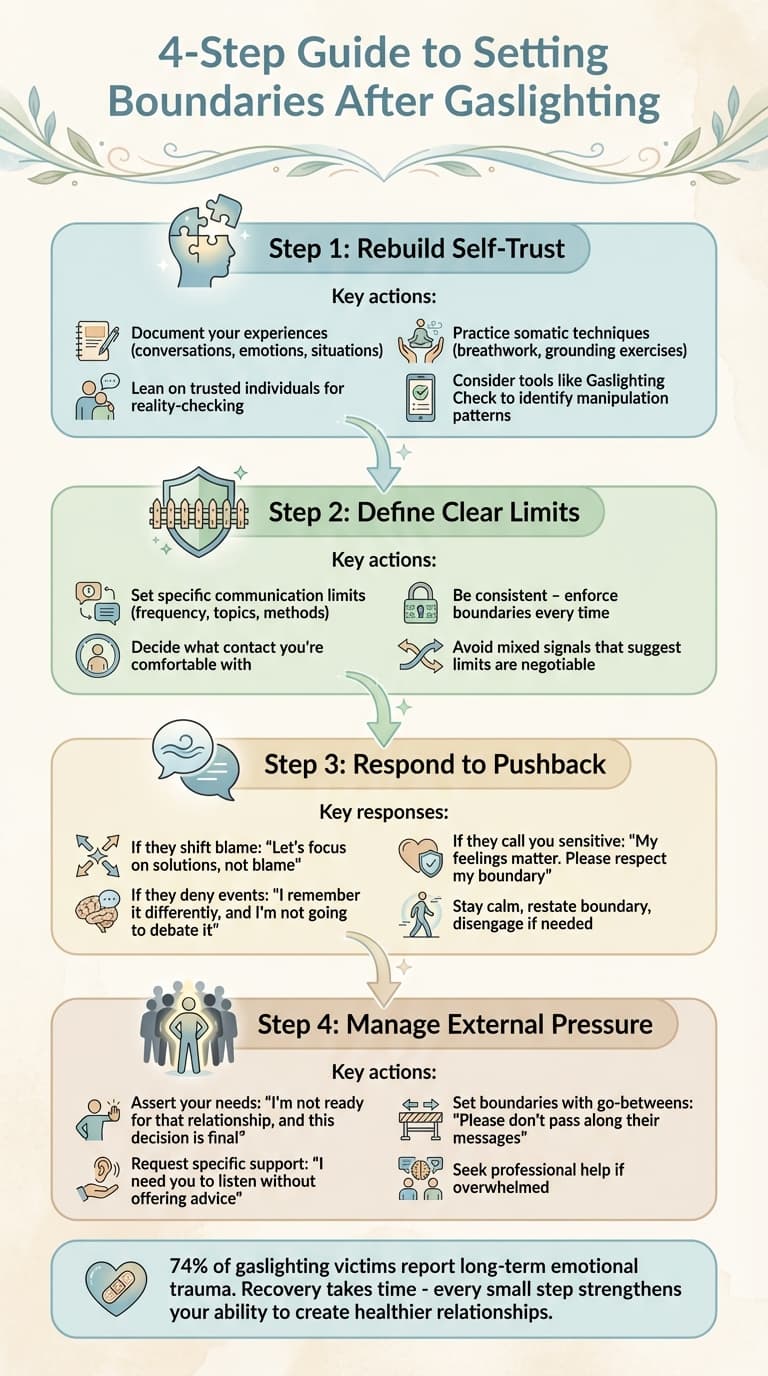
Gaslighting damages your ability to trust yourself, making setting boundaries feel confusing or wrong. This emotional manipulation often leaves victims doubting their reality, emotions, and decisions. Recovery involves rebuilding self-trust, setting firm boundaries, and managing external pressures from others. Here’s what you need to know:
- Self-trust: Gaslighting disrupts logical thinking and decision-making. Start documenting experiences, lean on trusted individuals, and use tools like Gaslighting Check to identify manipulation patterns.
- Boundaries: Set clear limits with gaslighters, remain consistent, and respond calmly to pushback. If manipulation persists, consider reducing or ending contact.
- Family and friends: Address pressure to forgive or reconcile by asserting your needs. Clearly communicate the support you require and avoid go-betweens.
- Long-term recovery: Shift boundaries to align with your values, balance interactions, and seek professional help if boundary-setting feels overwhelming.
Protecting yourself and rebuilding confidence is a gradual process. Every step, no matter how small, strengthens your ability to create healthier, safer relationships.
::: @figure
Rebuilding Self-Trust After Gaslighting
How Gaslighting Affects Your Ability to Make Decisions
Gaslighting throws your mental and emotional balance into chaos by triggering your nervous system's fight, flight, or freeze response. This heightened stress disrupts the prefrontal cortex, the part of your brain responsible for logical decision-making, leaving you feeling stuck and unable to trust your choices[2]. Over time, this constant tension can lead to anxiety, depression, headaches, and other physical issues[2].
But the damage isn’t just about feeling indecisive. When you’re repeatedly told things like “You’re too sensitive” or “You’re imagining things,” you start to doubt your emotions and dismiss your needs as unimportant or exaggerated[5]. This invalidation digs deep, creating attachment wounds that ripple into other relationships[5]. It becomes harder to understand your own boundaries or recognize what you truly need. Your body stays on high alert, your intuition weakens, and the resulting shame and confusion isolate you further. This makes it incredibly difficult to identify your emotional needs or establish healthy boundaries[2].
Recognizing these effects is a powerful first step toward regaining your confidence.
Steps to Rebuild Your Confidence
Once you understand how gaslighting impacts your ability to make decisions, you can take practical steps to rebuild your self-trust. Start by documenting your experiences - write down conversations, emotional reactions, and situations. This record can help counter the distorted narrative gaslighting often creates.
Lean on a small group of trusted individuals who can help you reality-check when you’re unsure. Practice using affirming statements like “I experienced it differently” to validate your own perspective[2][3].
Another helpful tool is Gaslighting Check, a platform that analyzes text or audio conversations for manipulation patterns. It identifies tactics like reality distortion, memory manipulation, emotional invalidation, and truth denial - things that are often hard to spot in the moment. Having an objective analysis confirm your suspicions can be deeply validating, helping you rebuild trust in your instincts[1].
In addition, somatic practices such as breathwork or grounding exercises can help your body recognize that the danger has passed. These techniques ease your nervous system, allowing your prefrontal cortex to regain its full capacity for clear thinking and decision-making[2]. Over time, these practices can help you feel safer and more in control of your choices.
Debbie McRae on Gaslighting and Boundaries, Dec 3, 2021
Setting Boundaries With Someone Who Gaslighted You
Rebuilding self-trust is a gradual process, and once it starts to take root, the next step is establishing clear boundaries to protect your well-being.
Defining Clear Limits for Contact
When dealing with someone who has gaslighted you, it's essential to determine exactly what you're comfortable with. Set specific limits around communication - how often you'll interact, what topics are acceptable, and the methods of contact you'll allow. For instance, you might decide to only respond to logistical texts during work hours and avoid conversations about personal or past conflicts.
Consistency is key. If you enforce your boundaries one day but relax them the next, it sends mixed signals, suggesting your limits are negotiable. This inconsistency can open the door to further manipulation and chip away at your confidence. Stick to your boundaries, even when it feels uncomfortable.
Once your limits are in place, be prepared for pushback and manipulation as you enforce them.
Responding to Manipulation When You Set Boundaries
When you set a boundary, it’s not uncommon for a gaslighter to resist. They may try to shift the blame, deny past events, or accuse you of overreacting. Your job isn’t to convince them or argue over their version of reality - it’s to stand firm and maintain your boundaries.
Use short, neutral, and direct responses that bring the focus back to your limits. For example:
- If they shift blame, say: "Let’s focus on solutions, not blame. If this continues, I’ll end the conversation."
- If they deny events: "I remember it differently, and I’m not going to debate it."
- If they accuse you of being too sensitive: "My feelings matter. Please respect my boundary."
Keep your tone calm and your voice steady. If they continue to push, restate your boundary clearly and disengage if necessary. That might mean hanging up, leaving the room, or simply not responding further. Tools like Gaslighting Check can help you document interactions and spot patterns of manipulation.
If the manipulation persists despite your efforts, it may be time to reevaluate the relationship.
When to Reduce or End Contact
There are times when even the strongest boundaries aren’t enough. Signs that you may need to limit or cut off contact include:
- Escalating manipulation and repeated disregard for your boundaries.
- Feeling emotionally drained or worse after every interaction.
- Noticing a decline in your mental or physical health.
Research indicates that 74% of individuals who experience gaslighting report long-term emotional trauma, and it often takes over two years in such relationships before seeking help [1].
If you choose to reduce contact, be specific about how you’ll proceed. For instance, you might move from daily calls to weekly check-ins or switch from in-person meetings to email-only communication. If you decide to go no-contact, prioritize your safety - especially if the person has shown signs of escalation, threats, or controlling behavior. Document all interactions, inform trusted friends or family, and consult a therapist or legal advisor if needed. Above all, remember this: protecting yourself doesn’t require an explanation to anyone.
Detect Manipulation in Conversations
Use AI-powered tools to analyze text and audio for gaslighting and manipulation patterns. Gain clarity, actionable insights, and support to navigate challenging relationships.
Start Analyzing NowManaging Boundaries With Friends and Family
Maintaining firm boundaries is essential for your recovery and reclaiming your personal authority. Even after setting boundaries with the gaslighter, you might encounter new challenges when friends or family fail to grasp your experience or urge you to "just move on."
Dealing With Pressure to Forgive or Reconcile
When loved ones push for forgiveness or reconciliation, they often aim to restore harmony or assume that time will naturally heal everything. But their insistence can feel like another layer of invalidation, especially when you're still working to rebuild your sense of reality.
Here's the truth: you don't owe anyone forgiveness, and reconciliation isn't a prerequisite for healing. Use clear, firm statements to close the conversation without inviting further debate. For example, say, "I'm not ready for that relationship, and this decision is final."[2][3] Keeping your responses brief can help prevent further questioning or invalidation.[2]
If someone tries to downplay what happened with remarks like "It wasn't that bad" or "They didn't mean it", trust your own experience. You might respond with: "I know what I went through, and I won't minimize it,"[3] or "You don't need to fully understand it to respect that it was harmful to me."[2] These statements affirm your reality without requiring others to agree.
This kind of clarity in communication also sets the stage for asking for the specific support you need from those around you.
Asking for the Support You Actually Need
Once you've made it clear that unwarranted forgiveness isn't on the table, take the next step by outlining the kind of support that will genuinely aid your recovery. Many people want to help but don’t know how. They might offer unsolicited advice, play devil's advocate, or try to "fix" the situation - when what you really need is someone to listen and believe you. Be explicit, for example: "I need you to listen and validate my experience without offering advice or defending their behavior."[2][6]
You can also set boundaries around specific actions. If a family member keeps passing along messages from the gaslighter, firmly say: "If they reach out through you, please don’t pass along their messages. The best way you can support me is by not being a go-between."[2][3] Or, if a parent insists on inviting both you and the gaslighter to family events, you could say: "I know you want everyone to get along, but I’m not open to contact with them. What would help is you not inviting them when I’m present and not bringing them up unless I do."[2]
Focus on leaning on one or two trusted individuals - or a therapist - who consistently validate your experience. Not everyone in your circle needs to fully understand; you just need a few people who do.[2] If the pressure from family becomes too much, your safety feels at risk, or you feel stuck in making decisions, consider reaching out to a trauma-informed therapist or support group for professional guidance.[2][4][7]
Taking these steps not only reinforces your current boundaries but also lays the groundwork for long-term recovery and healthier relationships.
Long-Term Recovery and Healthy Boundaries
Recovering from gaslighting is rarely a straightforward journey. It often involves moving from a state of reactive self-defense to establishing boundaries that align with your personal values.
Creating Boundaries Based on Your Values
In the beginning, boundaries may focus on escaping manipulation or protecting yourself from immediate harm. As you heal, those boundaries can shift to reflect what truly matters to you - values like honesty, respect, and emotional safety. For example, if honesty is a priority, you might decide, "I won’t engage in conversations where someone denies my reality." This shift allows you to approach relationships with clarity about what you need and deserve, rather than being guided by fear or past trauma. Recognizing manipulation as it happens is a powerful step toward reclaiming your sense of control and building boundaries that are rooted in your values rather than reactions to harm. This process strengthens your ability to trust yourself again and shapes healthier connections moving forward. [1]
This value-based approach naturally leads to exploring how boundaries can take different forms in your relationships.
Understanding Different Types of Boundaries
After experiencing gaslighting, it’s not unusual to swing between extremes - either isolating yourself completely or struggling to assert your needs. Rigid boundaries might involve cutting off anyone who reminds you of the gaslighter, even if they mean no harm. On the other hand, weak boundaries can show up when you say "no" but later give in under pressure. Striking a balance is key. Healthy boundaries clearly outline what behaviors you won’t tolerate - like someone dismissing your experiences - while also allowing space for meaningful interactions without resorting to isolation. [2][3]
If you find it challenging to maintain this balance, professional guidance can be invaluable.
When to Seek Professional Help
Sometimes, self-help strategies aren’t enough to navigate the complexities of recovery. If sticking to no-contact or low-contact with a gaslighter feels overwhelming, or if setting boundaries triggers intense anxiety, panic, or emotional detachment, it may be time to seek professional support. Gaslighting can disrupt your nervous system, leading to chronic stress, anxiety, depression, or even physical symptoms such as headaches or digestive problems. [2][4]
Therapists with expertise in trauma and emotional abuse - like LPCs, LMFTs, LCSWs, or psychologists - can provide tailored support. Methods such as trauma-focused CBT, EMDR, or somatic therapy address both the mental patterns (e.g., thoughts like "Am I overreacting?") and physical reactions (e.g., freezing or shutting down) that make boundary-setting difficult. [2][4] If you’re finding it hard to manage on your own, reaching out for help sooner can make a meaningful difference in your healing journey.
Conclusion
Rebuilding self-trust and setting boundaries after experiencing gaslighting is far from a straight path. Some days, you might feel steady and confident, while on others, doubt can sneak back in. Each step you take, no matter how small, helps untangle the patterns left behind by emotional abuse[2].
The boundaries you establish - whether it’s reducing contact, protecting your time, or refusing to engage in invalidating conversations - are rooted in core values like honesty, respect, and emotional safety. These boundaries aren’t just walls; they’re tools for protecting what truly matters to you.
If holding these boundaries feels overwhelming or if anxiety and self-doubt make trusting yourself difficult, seeking professional support can be a game-changer. Turning to therapists skilled in trauma and emotional abuse isn’t a sign of weakness - it’s a step toward reclaiming control. These professionals can guide you through the mental patterns and physical responses that make boundary-setting feel so daunting[2]. As mentioned earlier, boundaries that reflect your values are essential for long-term healing and recovery[2].
Alongside professional strategies, self-compassion becomes your greatest ally. Celebrate the wins, no matter how small - whether it’s recognizing manipulation as it happens or refusing to justify your feelings. As Dr. Stephanie A. Sarkis explains:
"When you can recognize manipulation tactics in real-time, you regain your power and can begin to trust your own experiences again."[1]
This isn’t just about surviving - it’s about reclaiming your voice, your reality, and your needs. Every step you take to honor your boundaries strengthens your ability to build relationships that are grounded in mutual respect and trust. Tools like Gaslighting Check can help you document your experiences and move closer to the emotional safety you deserve.
FAQs
How can I start trusting myself again after being gaslighted?
Rebuilding self-trust after experiencing gaslighting is a journey that requires both time and patience. The first step is to recognize that your feelings and experiences are real and valid. Take some time to reflect on past situations to pinpoint patterns of manipulation - this can help you better understand what happened and rebuild confidence in your own perceptions.
Seeking support can also make a big difference. Reach out to trusted friends, a therapist, or even explore tools that can help you identify emotional manipulation. Setting small, realistic goals for trusting your instincts again can make the process feel less overwhelming. And most importantly, treat yourself with compassion as you work through this healing process.
How can I effectively set boundaries with someone who has gaslighted me?
Setting boundaries with a gaslighter demands a mix of clarity and consistency. Begin by stating your limits in a straightforward manner - there’s no need to overexplain or justify your reasons. Keep your tone calm yet firm to assert your stance, and steer clear of arguments that could give way to further manipulation.
Make self-care a priority and lean on a network of supportive people who affirm your experiences. Being able to recognize patterns of manipulation can empower you to stand your ground and safeguard your mental health. The goal is to protect your emotional well-being and stay consistent in enforcing your boundaries, even when it feels tough.
How do I know when it’s time to reduce or cut off contact with someone who gaslighted me?
If someone keeps gaslighting you despite your attempts to set boundaries, or if the relationship leaves you feeling emotionally drained or unsafe, it might be time to consider limiting or cutting off contact. Your mental health and safety should always be your top priority.
Take note of how this relationship affects your well-being. If you’re frequently second-guessing your emotions, questioning your reality, or feeling completely worn out, it’s a clear signal that some distance could be essential. Trust your gut and do what’s necessary to safeguard yourself.