
Trauma Reframing in Gaslighting Recovery
Gaslighting can leave deep emotional scars, often leading to trauma that distorts reality, erodes self-trust, and causes long-term emotional pain. Survivors frequently struggle with self-doubt, confusion, and shame, making recovery a challenging but necessary process. The key to healing lies in trauma-focused reframing strategies, a therapeutic approach that helps survivors regain clarity and confidence.
Key Takeaways:
- Gaslighting manipulates perception, often causing symptoms similar to PTSD.
- Survivors may experience emotional numbness, self-doubt, and confusion due to internalized false narratives.
- Cognitive reframing is a powerful tool for challenging distorted beliefs and rebuilding self-trust.
- Therapies like CBT, DBT, and narrative therapy can help survivors process trauma and reclaim their sense of reality.
- Tools like Gaslighting Check provide practical support by identifying manipulation patterns and validating survivors' experiences.
Recovery involves recognizing harmful thought patterns, setting boundaries, and replacing negative beliefs with healthier perspectives. Therapy and supportive tools can guide survivors toward emotional healing and self-empowerment.
How Can You Heal the Effects of Gaslighting with Dr. Kate Truitt
Detect Manipulation in Conversations
Use AI-powered tools to analyze text and audio for gaslighting and manipulation patterns. Gain clarity, actionable insights, and support to navigate challenging relationships.
Start Analyzing NowWhat Is Gaslighting-Induced Trauma
Gaslighting-induced trauma develops from ongoing gaslighting vs. manipulation that distorts your perception of reality, erodes trust, and undermines self-confidence. Unlike a single traumatic event, this type of trauma builds over time as someone repeatedly denies your experiences, dismisses your emotions, and causes you to doubt your own judgment. The result? A deep sense of self-doubt and a mental fog that can feel impossible to shake.
Survivors often describe feeling overwhelming shame, guilt, and a loss of confidence. Many even report a sense of emotional numbness or a fractured sense of identity. Trauma therapist Dr. Ruth Gatt explains it this way:
"Gaslighting feeds off of confusion and murkiness... these moments might leave you feeling 'crazy,' shut down, or resentful." [2]
This persistent manipulation can lead to something known as epistemic injustice, where survivors are stripped of their ability to trust their own knowledge or experiences. Over time, they internalize the gaslighter's false narrative, which creates a profound sense of self-betrayal [2].
How Gaslighting Affects the Brain
Gaslighting doesn’t just mess with your emotions - it actively rewires your brain. When someone you trust behaves in an unexpected or contradictory way, your brain tries to resolve the confusion, often by adopting the gaslighter’s distorted version of reality [6][7]. Willis Klein, a PhD candidate at McGill University, explains:
"Gaslighters, in our view, are behaving in an atypical way... and they're making use of that surprise to direct the learning of the people they target." [7]
This manipulation is particularly effective in close relationships because of something called Social Baseline Theory. Essentially, humans instinctively lower their defenses around people they trust to conserve energy [6]. Gaslighters exploit this natural tendency, making it easier to plant seeds of doubt and distort your reality.
Over time, the stress caused by gaslighting can lead to physical changes in the brain, similar to what’s seen in PTSD. These changes include heightened levels of stress hormones, an enlarged amygdala (the part of the brain tied to fear), and a smaller hippocampus (which controls memory and emotional regulation) [4]. These shifts help explain why survivors often develop hypervigilance, constantly scanning for signs of further manipulation [4].
Emotional Effects on Survivors
The biological toll of gaslighting amplifies its emotional impact. Survivors often experience cognitive dissonance, caught between their own perceptions and the false reality imposed by the abuser [1]. This inner conflict creates emotional entanglements that make it harder to break free from the cycle of manipulation.
Gaslighting also isolates survivors, cutting them off from people who might validate their experiences. This isolation deepens the trauma. As domestic violence survivor Selah puts it:
"They live in an alternate reality. And they want you to live there with them." [8]
Survivors often avoid situations, people, or places that remind them of the manipulation. Physical symptoms - like constant fatigue, trouble sleeping, and difficulty concentrating - frequently accompany these emotional struggles [4]. Shame, in particular, can be paralyzing. Sociologist Paige L. Sweet highlights this:
"Shame is central to gaslighting because it keeps victims trapped in the exhausting cycle of defending themselves against assaults on their integrity." [8]
The combination of cognitive, emotional, and physical effects creates a vicious cycle. Survivors begin to doubt their ability to trust their own perceptions and make decisions. This underscores the importance of trauma-focused cognitive therapies that can help rebuild self-trust and mental clarity.
How Trauma-Focused Cognitive Reframing Works
::: @figure
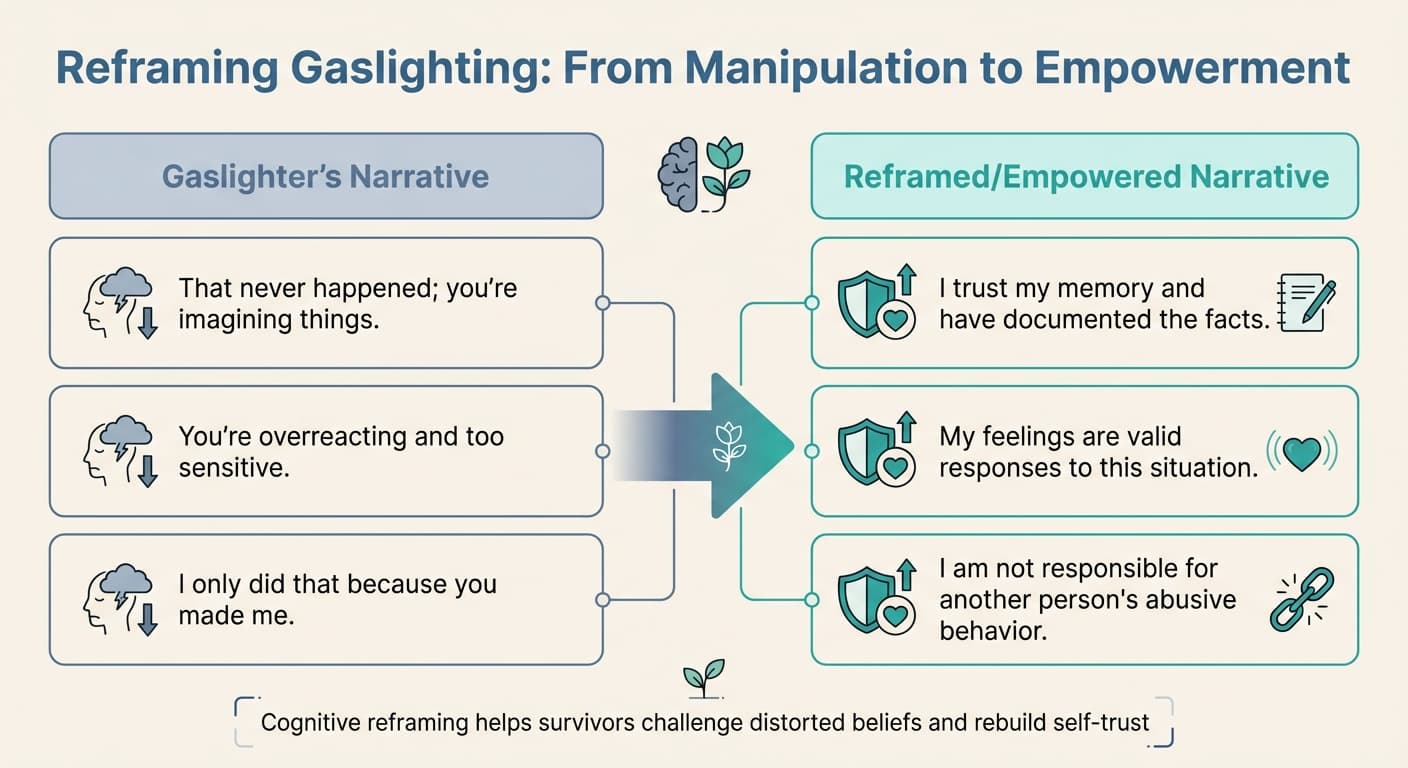
Cognitive reframing helps survivors shift from negative to constructive thinking by changing how they view their experiences. This technique is a cornerstone of Cognitive Behavioral Therapy (CBT), which is based on a simple yet powerful idea: negative emotions stem from negative thoughts, not the events themselves. Aaron T. Beck developed CBT with this principle in mind, emphasizing that how we interpret events shapes our emotional responses [9].
For survivors of gaslighting, reframing is particularly effective because it helps identify harmful thought patterns, assess their accuracy, and replace them with healthier perspectives. By doing so, it can reduce the physical symptoms of trauma-induced anxiety - like a racing heart or nausea - by interrupting the "fight-or-flight" response.
This approach equips survivors with tools to challenge distorted perceptions and regain a sense of control.
Basic Principles of Cognitive Reframing
The process starts with a straightforward framework: recognize the negative thought, question its truth, and replace it with a balanced perspective. For instance, instead of believing "I am losing my mind", a reframed thought might be, "I am reacting to manipulation, and my feelings are valid."
This method encourages survivors to reject the gaslighter's narrative and adopt a strengths-based outlook that fosters emotional growth. Research supports the effectiveness of reframing, showing that it can significantly improve interpersonal relationships. For example, studies have found it reduces the risk of child abuse among vulnerable parents and enhances teachers' interactions with challenging students. By breaking the cycle of automatic negative thinking, reframing allows survivors to rebuild their sense of reality and self-trust.
Research-Backed Reframing Methods
Evidence-based techniques for reframing include journaling, identifying manipulative language, and restructuring thoughts. A practical starting point is keeping a detailed journal. Record specifics like dates, exact phrases, and your emotional reactions. This creates an objective record that counters the "illusory truth effect", where repeated lies start to feel true. For example, instead of vague notes, write: "On 11/15 at 2:30 PM, X said, 'You're imagining things' when I brought up the budget."
Another key step is recognizing manipulative language patterns. When you can label tactics like reality distortion ("That never happened"), emotional invalidation ("You're too sensitive"), or blame-shifting, it becomes easier to separate the abuse from your sense of self. By documenting and questioning these narratives, survivors regain control over their perceptions. The table below illustrates how to reframe common gaslighting tactics:
| Gaslighter's Narrative | Reframed/Empowered Narrative |
|---|---|
| "That never happened; you're imagining things." | "I trust my memory and have documented the facts." |
| "You're overreacting and too sensitive." | "My feelings are valid responses to this situation." |
| "I only did that because you made me." | "I am not responsible for another person's abusive behavior." |
Assertive truth-stating is another powerful tool. Instead of engaging in debates with the abuser, focus on internal affirmations like, "I remember it differently, and I trust my memory", or, "My feelings are valid." Over time, practices like journaling, self-affirmation, and mindfulness help make reframing an automatic response. This process not only restores self-trust but also strengthens resilience against future manipulation.
These techniques lay a strong foundation for therapies aimed at further clarifying and reclaiming personal reality.
Therapy Methods for Trauma Reframing
Targeted therapies build on cognitive reframing techniques to help survivors recover from the distortions caused by gaslighting. These approaches aim to address the harmful beliefs and internalized messages that manipulators embed in their victims’ minds.
Cognitive Behavioral Therapy (CBT) for Changing Negative Beliefs
CBT is a powerful tool for helping survivors of gaslighting regain self-trust and reconnect with their sense of reality. It works by identifying and challenging the doubt and confusion instilled by gaslighters, which often lead victims to adopt the abuser’s manipulative messages as their own internal dialogue. This internalized gaslighting can significantly erode self-confidence and self-worth [2][5].
Research highlights a connection between gaslighting and PTSD symptoms, making CBT particularly effective in addressing these trauma responses. Specialized forms of CBT, such as Cognitive Processing Therapy (CPT) and Prolonged Exposure, are often used to treat the emotional scars left by gaslighting [4]. Additionally, CBT includes assertiveness training, which equips survivors with skills to set boundaries and communicate their needs clearly - key steps in preventing further emotional manipulation [5].
Therapists also help clients recognize and understand the tactics used by gaslighters, enabling survivors to trust their own memories and perceptions. Dr. Chivonna Childs, a psychologist at Cleveland Clinic, emphasizes the importance of confronting gaslighting behaviors:
"Calling out gaslighting behaviors helps set boundaries and change the power dynamic. It puts the other person on notice that you will no longer accept this type of treatment" [3].
This structured approach allows survivors to dismantle the manipulator’s narrative, restoring their confidence and reinforcing their ability to trust themselves.
Dialectical Behavior Therapy (DBT) and Mindfulness
While CBT focuses on reframing distorted beliefs, DBT complements it by teaching mindfulness techniques to manage emotional triggers. Mindfulness practices in DBT, such as the STOP technique (Stop, Take a breath, Observe, Proceed mindfully), help survivors pause and reflect before reacting, breaking the cycle of automatic stress responses often triggered by trauma [10]. This is especially crucial for countering the loss of self-identity, or deindividuation, caused by gaslighting. By fostering metacognition - the ability to observe one’s own thoughts - DBT helps survivors reconnect with their sense of self [11].
Another key DBT skill involves distinguishing between primary emotions (natural reactions like anger or sadness) and secondary emotions (judgments about those feelings, such as shame or guilt). This distinction helps reduce emotional suffering by clarifying which feelings are valid and which are unhelpfully self-critical [12]. The "Checking the Facts" technique further encourages survivors to evaluate whether their emotional responses align with the actual evidence of a situation, a crucial step in rebuilding trust in their perceptions [11].
Radical Acceptance, another DBT practice, focuses on embracing the reality of trauma without judgment. Researcher Courtney E. Ackerman explains:
"The act of accepting that we are feeling emotions we would rather not feel can be the key to letting go of them" [12].
By accepting the truth of their experiences, survivors can move past the constant internal struggle and begin to release the emotional weight of the gaslighting.
Narrative Therapy for Rebuilding Personal Stories
Narrative therapy empowers survivors to reclaim their experiences and reject the gaslighter’s version of reality. By engaging in narrative reconstruction, survivors learn to see the manipulator’s narrative as an external imposition rather than their own truth [2][4].
This approach is particularly relevant in cases where survivors’ testimonies have been invalidated. For example, 8.8% of cases initially dismissed as psychosomatic are later found to have an underlying organic cause [4]. This highlights the damage caused when survivors are not believed. Through narrative work, individuals can rebuild their self-image as credible and capable, shifting accountability back to the perpetrator. By reconstructing their personal stories, survivors regain their identity and restore their self-trust, independent of the manipulator’s influence.
How Gaslighting Check Supports Trauma Reframing

Technological tools like Gaslighting Check provide practical, data-backed support to complement therapeutic strategies. Survivors of gaslighting often struggle with self-doubt, as manipulative relationships can distort their sense of reality. On average, individuals endure over two years in such relationships before seeking help [13]. During this time, they frequently lack the objective validation and emotional support needed to rebuild trust in their own perceptions. Gaslighting Check steps in to provide that validation, offering evidence-based insights to challenge the manipulation they’ve experienced.
Features That Help With Cognitive Reframing
Gaslighting Check is designed to reinforce trauma-focused cognitive reframing by using AI to analyze conversations for manipulation tactics. It identifies patterns like blame-shifting, reality distortion, and emotional invalidation. This kind of external confirmation helps survivors rebuild their self-trust. As Stephanie A. Sarkis, Ph.D., author of Healing from Toxic Relationships, explains:
"Identifying gaslighting patterns is crucial for recovery. When you can recognize manipulation tactics in real-time, you regain your power and can begin to trust your own experiences again." [13]
The platform provides Detailed Reports that break down manipulation techniques and offer actionable insights. One user, Robert P., shared his experience:
"The detailed analysis of manipulation techniques was incredibly helpful. It's like having a therapist's insight on demand." [13]
Another key feature is Conversation History, which tracks recurring patterns over time. This helps users see systemic manipulation rather than focusing on isolated incidents, effectively countering the “maybe I imagined it” mindset that gaslighting often creates.
Privacy and Accessibility for Safe Recovery
A safe, private space is essential for survivors to process their experiences without fear of being discovered. Gaslighting Check prioritizes privacy with features like end-to-end encryption, anonymity, and automatic data deletion. These measures are critical, especially since 74% of gaslighting victims report long-term emotional trauma [13].
To ensure accessibility, the platform offers a free version with basic text and voice analysis. For those seeking deeper insights, premium features are available for $9.99 per month, including Conversation History tracking and Detailed Reports. This tiered approach ensures that even individuals with limited financial resources can access support, while also providing advanced tools for those ready to delve further into their recovery journey. These features work hand-in-hand with therapeutic interventions to help survivors document their progress and regain control over their lives.
Conclusion
Recovering from gaslighting isn’t about erasing your past - it’s about reclaiming your ability to trust yourself again. Gaslighting leaves behind deep emotional scars that demand structured support and intentional healing. Trauma-focused techniques, like cognitive reframing, help challenge the distorted beliefs manipulators instill.
Therapeutic practices such as cognitive behavioral therapy (CBT), dialectical behavior therapy (DBT), and narrative therapy offer a way forward. These approaches help replace harmful internalized narratives - like “I’m too sensitive” - with healthier, reality-based perspectives. As Kobie Allison, Founder of Modern Minds, explains:
"Reclaiming yourself after gaslighting is ultimately about empowerment. It is about standing tall in your truth, honouring your voice, and moving forward with strength and clarity" [15].
Complementing therapy, tools like Gaslighting Check provide survivors with objective validation. Its AI-powered analysis identifies manipulation patterns, helping users rebuild confidence in their perceptions. With privacy-focused features, it ensures survivors can access support safely and discreetly, reinforcing trust in their experiences and aiding therapy work.
Recovery also involves small, intentional actions. Documenting interactions, practicing affirmations like “My feelings are valid,” and setting firm boundaries create a foundation for healing. As writer Akin Agbeja aptly states:
"The problem isn't your perception. The problem is their manipulation" [14].
FAQs
How do I know it was gaslighting and not me?
Gaslighting happens when someone manipulates you into questioning your reality. On the other hand, self-gaslighting stems from your own internal doubts or confusion, often influenced by past experiences or ingrained beliefs. To tell the difference, consider this: Are your doubts triggered by someone dismissing your feelings or experiences, or are they coming from within, fueled by your own self-questioning?
Recognizing patterns is key. If you notice consistent invalidation from others or a recurring sense of self-doubt, it could point to gaslighting or self-gaslighting. Addressing this often requires tools like trauma-focused cognitive reframing, which helps reshape how you view your experiences. Seeking professional guidance can also play a vital role in rebuilding trust in your own perceptions.
What’s the fastest way to rebuild self-trust?
Rebuilding self-trust after gaslighting is a gradual process that begins with small, deliberate actions. Start by reconnecting with your instincts through activities like journaling, practicing mindfulness, and establishing clear boundaries. Surround yourself with people you know you can rely on, and make decisions with confidence to help reinforce your inner voice. Remember, progress takes time, so acknowledge and celebrate even the smallest victories to keep building confidence and momentum.
Can Gaslighting Check help if I’m still in the relationship?
Gaslighting Check can help by examining communication patterns to spot manipulative language and coercive tactics. This tool is designed to assist you in identifying gaslighting behaviors, offering insights that support your awareness and recovery - even if you're still in the relationship.