
How AI Detects Coercive Language in Real Time
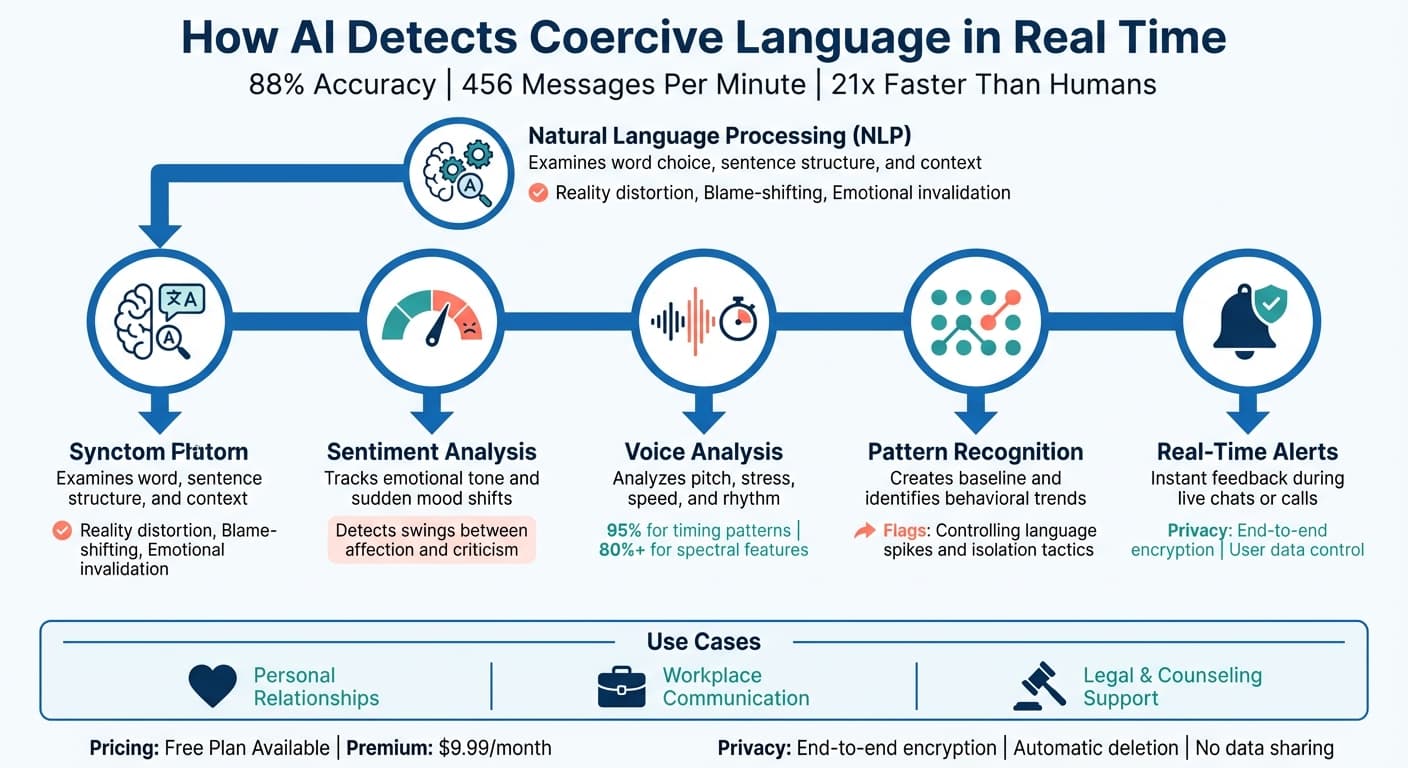
AI can now detect coercive language in conversations as they happen. Using tools like Gaslighting Check, it identifies manipulation tactics such as reality distortion, blame-shifting, and emotional invalidation. By analyzing text, tone, and patterns with 88% accuracy, these systems offer immediate feedback, helping you recognize harmful dynamics and regain clarity. Here's how it works:
- Natural Language Processing (NLP): Examines word choice, sentence structure, and context to spot manipulation.
- Sentiment Analysis: Tracks emotional tone and sudden shifts in mood.
- Voice Analysis: Detects stress or aggression in tone, even if words seem neutral.
- Real-Time Alerts: Flags coercive behavior instantly during live chats or calls.
- Privacy-Focused: Uses encryption and allows full control over your data.
These tools are useful in personal relationships, workplaces, and legal cases, providing objective insights without compromising privacy. Free and premium options ($9.99/month) make it accessible to everyone. AI isn't a replacement for human judgment, but it empowers you to recognize and address manipulative behavior.
::: @figure
How AI Identifies Coercive Language Patterns
AI breaks down conversations to uncover manipulation, starting with Natural Language Processing (NLP). This technology doesn't just flag certain words - it digs deeper, analyzing sentence structure, word choice, and the overall meaning of a conversation. For example, it can tell the difference between someone genuinely asking, "Are you sure?" and someone using that same phrase repeatedly to chip away at your confidence.
Natural Language Processing and Sentiment Analysis
With its ability to understand context, AI uses advanced techniques to pick up on subtle language cues. NLP examines how language operates within a dialogue, spotting tactics like:
- Reality distortion: Statements like "That never happened" aimed at making you doubt your memory.
- Blame-shifting: Redirecting responsibility away from the speaker.
- Emotional invalidation: Dismissing or undermining your feelings.
On top of this, sentiment analysis tracks the emotional tone of conversations and identifies shifts in mood. For instance, it can detect manipulation patterns like swinging between excessive affection and harsh criticism - an emotional rollercoaster often used to control or confuse.
Pattern Recognition and Emotional Signals
AI doesn't stop at individual phrases or sentences. It looks for behavioral trends across multiple interactions, creating a baseline of normal communication patterns. When sudden changes occur - like a spike in controlling language or isolation tactics - it raises red flags.
Voice analysis adds another layer by examining vocal features such as pitch, stress, speed, and rhythm. Studies show that voice analysis can hit a 95% accuracy rate for timing patterns and at least 80% accuracy for identifying spectral features in high-risk scenarios [4][5].
For example, the Gaslighting Check tool combines text and voice analysis to catch contradictions. Imagine someone writing, "I'm just concerned about you", but their tone betrays pressure or aggression. This dual approach helps AI detect manipulation even when the words alone don't tell the full story.
Real-Time Detection vs. Historical Analysis
AI operates on two fronts: real-time detection and historical analysis.
-
Real-time detection works instantly, analyzing live audio streams or active chat inputs. This quick response can provide validation in the middle of a confusing interaction, giving you a moment to pause and reassess.
-
Historical analysis, on the other hand, takes a broader view. It combs through archived messages, emails, or transcripts to uncover long-term patterns and escalation trends. For example, it might reveal how often specific manipulative tactics appear over weeks or months.
These two methods - real-time and historical - show how AI can adapt to different needs, whether it's offering immediate support or uncovering hidden patterns over time. Together, they make AI a powerful tool for identifying coercive language.
Where AI Coercive Language Detection Gets Used
AI coercive language detection isn't just an abstract idea - it's actively helping people navigate tricky situations in their personal lives, workplaces, and even legal cases. These tools bring much-needed clarity when manipulation clouds judgment.
Personal Relationships
In personal relationships, many turn to tools like Gaslighting Check when they suspect something feels off but can't quite articulate it. These tools analyze text messages, voice notes, and even recorded conversations to identify manipulation tactics, such as reality distortion, blame-shifting, or emotional invalidation. For instance, a partner repeatedly saying, "You're remembering it wrong", might signal an attempt to distort someone's perception of reality. Over time, the tool compiles patterns into detailed reports that shed light on these behaviors. Whether it's a romantic relationship, family conflict, or a friendship where boundaries are crossed, these reports give users the insight they need to understand and address manipulative dynamics.
Workplace Communication
AI detection also plays a critical role in professional settings, where coercive language can be harder to spot due to the polished nature of corporate communication. Research shows that AI can process and analyze hundreds of workplace messages per minute, pinpointing coercive language with impressive accuracy[1]. This capability is especially valuable for HR teams dealing with overwhelming workloads. For example, the UK's National Police Chiefs' Council reported a backlog of 25,000 digital devices awaiting review in investigations[3]. AI tools help flag toxic communication patterns early, providing solid evidence that can guide timely intervention before issues spiral out of control.
Legal and Counseling Support
AI's usefulness extends into legal and counseling contexts, where it provides clear, unbiased documentation of coercive communication. These tools track and log patterns of manipulation, offering objective evidence that can assist both legal professionals and therapists in complex cases[1]. Surveys show strong support from law enforcement for using this technology to identify problematic behavior early on[1]. Tools like Gaslighting Check generate concise reports that highlight escalation patterns, cutting through the "he said, she said" nature of many disputes. This objective analysis is invaluable for legal evaluations and therapeutic processes, helping professionals make informed decisions based on evidence rather than subjective accounts.
How AI Tools Protect User Privacy and Data
Handling sensitive conversations requires the highest level of data security. Detecting coercive language means accessing private exchanges, but this must be done with airtight safeguards. To address this, Gaslighting Check combines real-time analysis with rigorous encryption to protect your data every step of the way.
Data Encryption and Privacy Measures
Gaslighting Check employs end-to-end encryption to secure text messages and voice recordings during both transmission and storage. This ensures that only you can access your conversations - not even the platform itself can view the content.
According to research from Edge Hill University, AI can process data 21 times faster than human investigators while safeguarding sensitive information[3]. The system identifies signs of coercive behavior without requiring human review of the entire conversation[1]. This design is especially critical for abuse victims who might feel uneasy sharing evidence if it required manual inspection. By prioritizing privacy, the platform eliminates a significant psychological hurdle[1].
Additionally, the platform enforces automatic deletion policies, giving you the choice to erase analyzed data after a set period. Users retain full control over their information, with options to view, edit, or permanently delete conversation logs and analysis reports as needed. This flexibility empowers users to manage their data on their terms, reducing the risk of data breaches while allowing evidence to be saved for legal or therapeutic purposes if necessary.
Beyond these technical measures, the platform ensures that privacy protections remain accessible to everyone.
Making Security Affordable and Accessible
Protecting your privacy doesn’t have to come at a high cost. Gaslighting Check offers a free plan for basic text analysis, ensuring that anyone can access this essential tool. For those seeking additional features, the premium plan costs $9.99 per month and includes voice analysis, detailed reporting, and conversation history tracking - all while maintaining the same high level of encryption and data protection.
This pricing approach reflects a core belief: everyone should have access to tools that help identify manipulation, regardless of financial limitations. The platform also enforces strict no-sharing policies, meaning your data is never sold to third parties or used for anything beyond its intended purpose. For users in high-risk situations, discreet alerts and instant data wipe features provide added peace of mind.
Conclusion: Using AI to Recognize and Stop Coercive Language
Real-time detection of coercive language can give individuals a stronger sense of control. Studies indicate that AI can identify coercive language with an impressive 88% accuracy, analyzing 456 messages per minute - making it about 21 times faster than a human could process the same information [1][3]. This speed and accuracy help bring clarity to potentially manipulative interactions, showcasing the practical utility of AI tools like Gaslighting Check.
Gaslighting Check leverages this technology to detect coercive patterns in real time, all while prioritizing your privacy. Its AI is designed to identify behaviors like reality distortion, blame shifting, and emotional invalidation as they happen. Research backs the platform’s effectiveness in spotting early signs of abuse [1][2].
The service also includes features like end-to-end encryption, automatic message deletion, and flexible pricing options. A basic plan is available for free, while the premium tier costs $9.99 per month. These features ensure that users can safeguard their data while creating objective records that might assist in therapy, legal cases, or personal reflection.
While AI isn’t a substitute for human judgment, its ability to provide objective insights can help you trust your own perceptions. By flagging coercive language in real time, these tools allow you to set boundaries, seek help, or simply gain clarity. Ultimately, this technology equips you to recognize harmful patterns, protect your emotional health, and take meaningful steps toward a better outcome.
FAQs
How does AI identify manipulative language versus honest communication?
AI relies on sophisticated tools like Natural Language Processing (NLP), sentiment analysis, and voice tone evaluation to break down and interpret conversations as they happen. By studying word choices, emotional signals, and the overall context, it can pinpoint manipulative behaviors such as gaslighting, blame-shifting, or dismissing emotions.
These technologies are built to distinguish honest communication from more subtle, manipulative tactics by recognizing patterns, shifts in tone, and inconsistencies in language or intent. This allows users to better grasp the dynamics of their conversations and gain a clearer perspective.
How do coercive language detection tools protect user privacy?
Coercive language detection tools, like Gaslighting Check, are built with strong privacy safeguards to keep user data secure and confidential. One key feature is end-to-end encryption, which ensures that conversations remain protected from unauthorized access while being transmitted.
These tools also follow automatic data deletion policies, meaning sensitive information is erased promptly and not stored longer than necessary, reducing the chances of breaches. In some cases, the data is processed directly on the user’s device, adding an extra layer of security by avoiding external servers altogether.
By focusing on encryption, minimizing data storage, and following strict privacy protocols, these tools offer a secure way to identify coercive language while maintaining user trust.
When is real-time detection of coercive language more useful than reviewing past conversations?
Real-time detection plays a crucial role in situations where quick action can make all the difference in preventing psychological harm or escalation. Imagine live interactions - whether it's a heated argument with a partner, a tense workplace conversation, or an online chat. Spotting manipulation tactics like gaslighting, blame-shifting, or emotional invalidation as they happen gives people the chance to respond right away. This might mean setting firm boundaries, calling out the behavior, or simply stepping away before things spiral further.
Although reviewing past conversations can uncover patterns or serve as documentation of abuse, real-time detection offers a unique advantage: the ability to act in the moment. Addressing manipulation as it unfolds not only helps to interrupt harmful behavior but also minimizes the potential for long-term emotional damage.